
English MCQs with Answers for CSS, PPSC & NTS
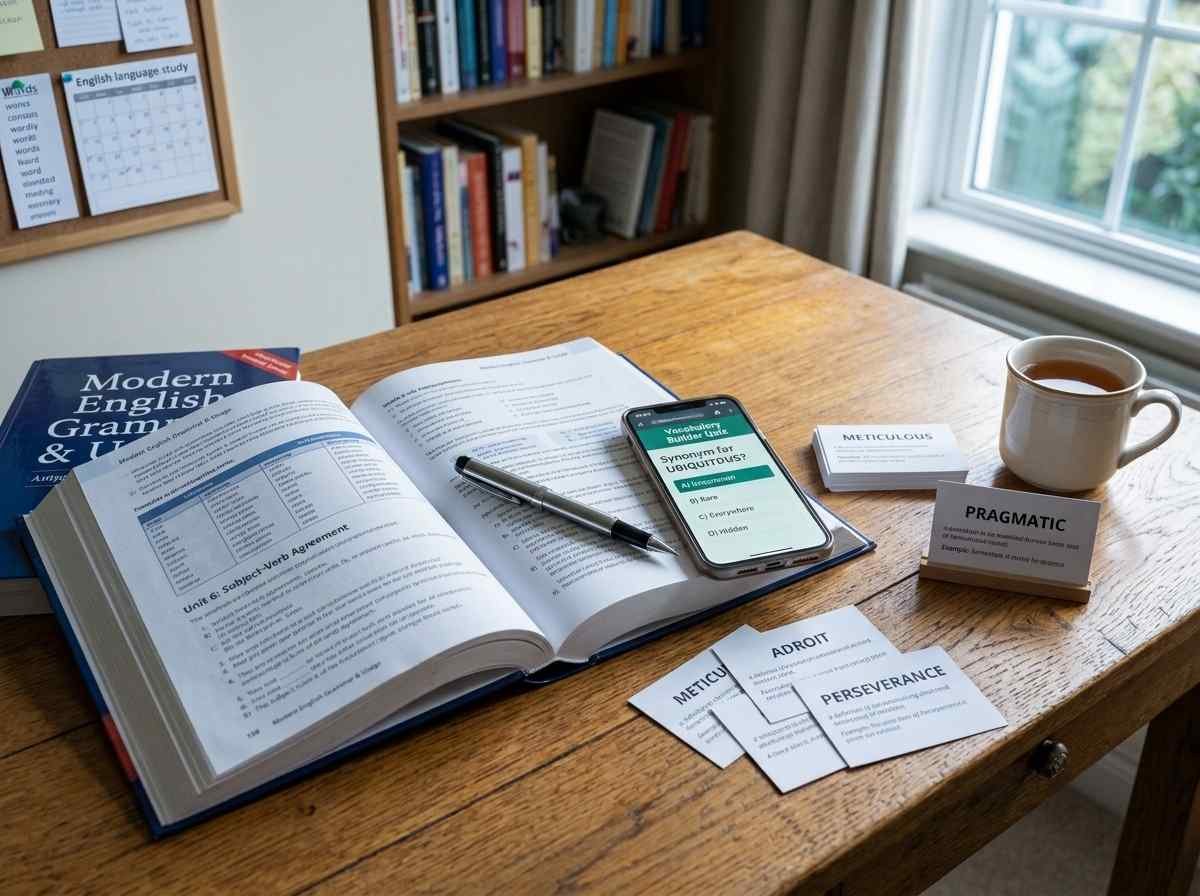
English is a decisive portion in almost every Pakistani competitive and recruitment exam. In CSS it is compulsory, and in PPSC, FPSC, and NTS tests the objective English section can make or break your merit. This guide covers what is tested and how to build the grammar and vocabulary that these exams demand.
Why English carries so much weight
Strong English signals clear thinking and communication, which is exactly what these exams select for. The objective portion is also highly scoreable, because grammar rules and vocabulary follow patterns you can master with practice. Candidates who treat English seriously often gain a comfortable margin over those who neglect it.
What the objective English section tests
- Grammar: tenses, prepositions, articles, subject-verb agreement, and sentence correction.
- Vocabulary: synonyms, antonyms, and one-word substitutions.
- Idioms and phrases: common expressions and their meanings.
- Spelling and usage: commonly confused words and correct forms.
- Comprehension: understanding short passages and answering accurately.
Synonyms, antonyms, and prepositions appear again and again in past papers, so build a strong core in these first.
How to build vocabulary that sticks
Memorizing long word lists rarely works, because words fade without use. A better method is to learn words in context, revise them through testing, and use them in your own sentences. Flashcards and daily quizzes turn passive recognition into active recall, which is what the exam actually measures.
Master grammar through practice
Grammar is a system of patterns, not a set of random rules. Once you practice enough correction and preposition questions, the right answer starts to feel natural. Our interactive MCQ test series lets you drill grammar and vocabulary questions with instant feedback, so you learn from every mistake immediately.
A simple daily English routine
Spend fifteen minutes a day on English. Learn a handful of new words, revise a grammar rule, and attempt a short quiz. Keep a notebook of the words and rules you get wrong, and revisit it often. This steady approach builds lasting command far better than occasional long sessions.
Reading well-written English every day, whether news or quality articles, also sharpens your instinct for correct usage. Combine your English work with our Everyday Science MCQs and General Knowledge MCQs guides for balanced compulsory preparation. If you are selecting CSS optionals, see our CSS optional subjects guide.
Errors that lower scores
Candidates often memorize vocabulary without practicing it, then forget it under pressure. Others ignore grammar rules, hoping familiarity will carry them, and lose easy correction marks. Regular, tested practice fixes both and steadily raises accuracy.
How many questions to expect
The objective English section is highly scoreable because grammar and vocabulary follow patterns you can master. In most papers it contributes a substantial block of marks, and a well-prepared candidate can clear much of it quickly. That speed and accuracy often creates a decisive margin over weaker candidates.
Frequently asked questions
How do I improve vocabulary quickly?
Learn words in context, revise them through testing, and use them in your own sentences. Daily quizzing turns passive recognition into active recall, which is what the exam measures.
Which grammar areas are most tested?
Tenses, prepositions, articles, and sentence correction appear most often, along with synonyms and antonyms. Build a strong core in these first.
Can I practice English MCQs free?
Yes. Our English test lets you drill grammar and vocabulary with instant feedback, completely free.
Practice with past papers and real reading
Two habits separate strong English candidates from the rest. The first is working through past-paper questions, which reveals the grammar rules and vocabulary that examiners test most often, such as prepositions, sentence correction, and common synonyms. The second is reading well-written English every day, which quietly trains your ear for correct usage so the right answer simply feels right.
Bring the two together by testing yourself on what you read. When you meet a new word, learn it, then attempt questions that use it. When a grammar rule trips you up, drill it until it becomes automatic. A few focused minutes each day, reinforced with the English test, builds command that lasts well beyond exam day.
How long does it take to improve?
With fifteen focused minutes a day, most candidates see clear improvement within a few weeks. Grammar patterns become familiar and your vocabulary grows steadily. The key is daily consistency and honest review of mistakes, not occasional long sessions that fade from memory.
Start improving your English today
English rewards daily, deliberate effort. Learn a little, test yourself, and review your mistakes honestly. Open the English test now, attempt your first set, and start turning this high-weight section into one of your strongest scoring areas. A few deliberate minutes each day, kept up over weeks, will quietly transform your grammar and vocabulary and give you a clear edge on exam day.
