Current Affairs Preparation Strategy for CSS & PPSC 2026
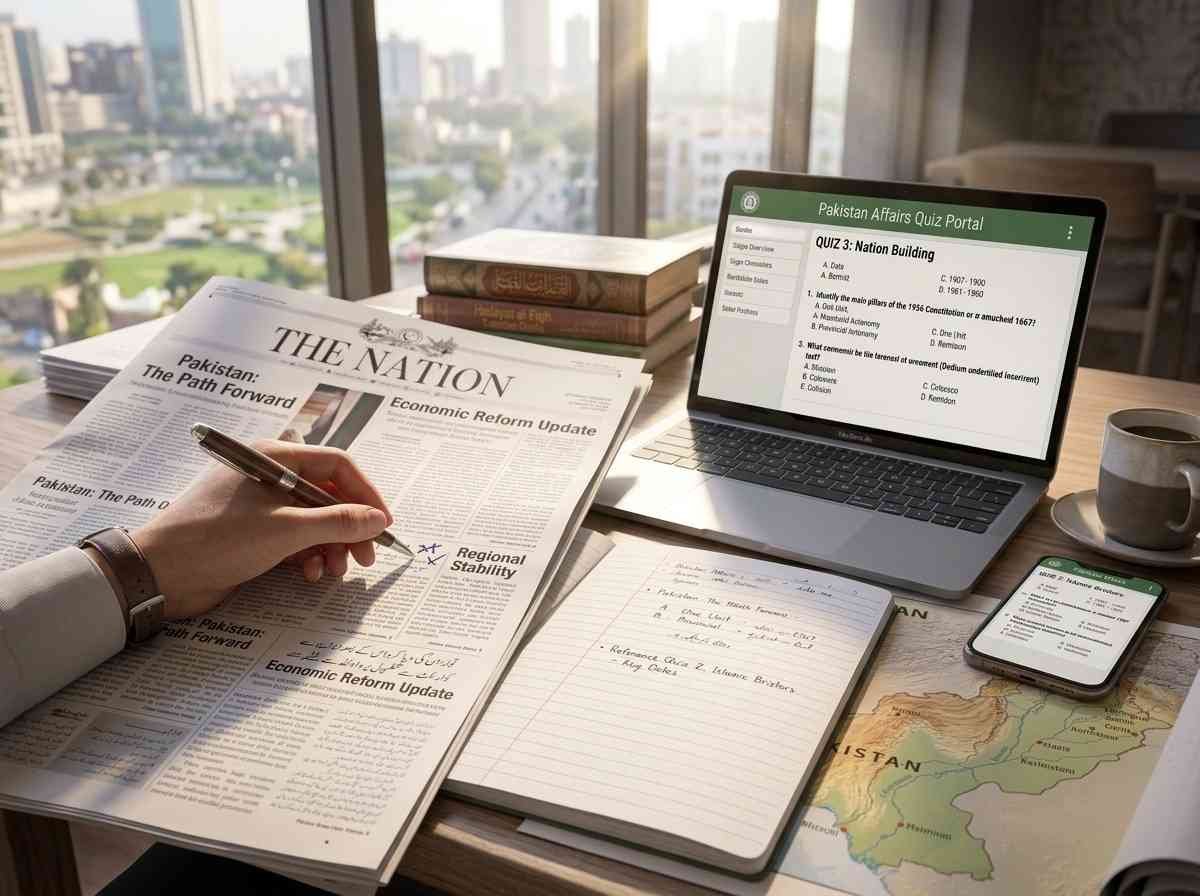
Current Affairs is the one compulsory subject in Pakistani competitive exams that changes every month. It cannot be crammed the night before the exam or covered from a static guidebook alone. Candidates who score well in Current Affairs do so because they built a consistent year-round habit of reading, organising, and testing themselves on what they read. This guide explains a practical strategy that keeps you genuinely current without feeling overwhelmed.
The fundamental challenge of Current Affairs
The volume of news produced every day is enormous, and most of it is irrelevant to exam preparation. The challenge is not staying uninformed but rather staying selectively and deeply informed about developments that are genuinely likely to be tested. Examiners favour events with lasting policy significance over temporary or local news. An international summit, a constitutional amendment, a major economic agreement, or a significant shift in foreign policy is far more likely to appear in an objective paper than a daily crime story or a celebrity-news item.
Build a reading habit around quality sources
The most effective Current Affairs preparation starts with limiting your sources rather than expanding them. Following one or two reliable English-language newspapers or news magazines consistently is far more useful than scanning dozens of websites and social feeds. What matters is reading carefully enough to understand the significance of events, not merely registering that they happened.
A sustainable reading routine is twenty to thirty minutes per day on current events, focused on national policy, international relations, economic developments, and major appointments. This is enough to stay current without consuming your study time for other subjects.
The monthly consolidation method
Daily reading alone is not enough. The key habit that distinguishes strong Current Affairs candidates is monthly consolidation. At the end of each month, review the major developments you have followed and write a one-page summary of the events most likely to be tested in a competitive exam. This forces active processing of what you have read and creates a compact, revisable record that is far more useful than a pile of old newspaper clippings.
Over an eighteen-month preparation period, this monthly consolidation creates a chronological archive of exam-relevant events that you can revise systematically in the final weeks before the exam. Candidates who do this consistently rarely feel under-prepared for the Current Affairs portion.
Key areas to prioritise
Not all current events are equally likely to be tested. Prioritise these categories in your monthly consolidation:
- Pakistan’s foreign relations: major diplomatic visits, agreements, and shifts in bilateral relationships.
- Economic developments: budget highlights, major project announcements, IMF and World Bank engagements, and inflation or growth data.
- Constitutional and governance changes: new laws, amendments, and key appointments including the military, judiciary, and civil service.
- Regional and global affairs: major conflicts, international summits, and decisions by the UN and other global bodies.
- Awards and rankings: Pakistan’s position in major international indices, and notable Pakistani or international award recipients.
Close the loop with active testing
Reading and note-taking are the input stage. The output stage, which most candidates skip, is testing yourself on what you have read. Active recall through MCQ practice embeds current affairs knowledge more firmly than any amount of re-reading. Our interactive MCQ test series includes Current Affairs questions that you can practice regularly, and we update the content to reflect recent developments so your practice stays relevant. Use it as the daily testing component of your Current Affairs routine. Combine it with our General Knowledge MCQs and Pakistan Affairs MCQs guides, since the three subjects overlap significantly.
The final month: intensive revision
In the final month before your exam, shift from new reading to intensive revision of your monthly summaries. Go through the last twelve months of consolidated notes, identify the most significant events, and test yourself on the key facts: names, dates, outcomes, and significance of each development. This final revision phase is where your monthly consolidation habit pays off most clearly. Candidates who have maintained the habit enter this phase with twelve months of organised material to review; those who have not are scrambling to read everything at once.
Current Affairs for CSS specifically
The CSS Current Affairs paper demands more than knowledge of facts: it requires analytical comment. Practice writing short analytical responses to recent events, explaining causes, implications, and Pakistan’s position. This skill develops slowly and rewards candidates who build it steadily across their preparation year rather than in the final weeks. Read quality editorial writing in addition to news reporting to develop the analytical register the CSS paper expects.
Frequently asked questions
How far back should my current affairs preparation go?
For CSS, covering the last twelve months in depth is the standard. For PPSC and FPSC objective tests, the last six months of significant events are the most relevant. Examiners focus on events of lasting significance rather than very recent breaking news.
Which English newspaper is best for Current Affairs preparation?
Any reliable national English-language newspaper is suitable. Consistency matters more than the specific source. Read the same publication daily so your comprehension deepens rather than restarting with a new outlet each week.
Can I prepare Current Affairs through MCQ practice alone?
MCQ practice is essential for testing what you know, but it cannot replace the reading that gives you the knowledge in the first place. Combine daily reading with regular testing on our MCQ test series for the most effective approach.
Start building your Current Affairs habit today
Current Affairs rewards consistency over intensity. Begin the daily reading habit today, implement the monthly consolidation method from this month forward, and test yourself regularly on our MCQ test series. These three habits, maintained over the months ahead, will make Current Affairs one of the most confidently prepared portions of your exam.